Showing posts with label Riichiro Manabe. Show all posts

Sunday, June 30, 2019

AKIRA IFUKUBE IN CONCERT! Taking in an Orchestral Performance of the Maestro's Greatest Hits!

A display of personal pictures of the legendary composer Akira Ifukube. Photo by Brett Homenick.

Saturday, June 29, saw a performance of Godzilla and other Toho monster movie music composed by Akira Ifukube and Riichiro Manabe. The concert took place at Shibuya Cultural Center Owada's Sakura Hall, and it was attended by numerous genre luminaries. The guest of honor was Toho actress Kumi Mizuno, star of such films as Gorath (1962), Matango (1963), Frankenstein Conquers the World (1965), Monster Zero (1965), War of the Gargantuas (1966), and Godzilla vs. the Sea Monster (1966).

Guests of honor Teruyoshi Nakano and Kumi Mizuno pose for pictures. Photo by Brett Homenick. 

Also on hand as a special guest was longtime Toho SFX assistant director and director Teruyoshi Nakano, who helmed Toho special effects from Godzilla vs. the Smog Monster (1971) through Godzilla 1985 (1984). Right before the concert began, Nakano-san was interviewed onstage, and the recent passing of Tadao Takashima was noted. Nakano-san and the interviewer made sure to pay tribute to Mr. Takashima's memory.

Nakano-san officially kicked off the festivities by calling out "Action!" in Japanese from his seat in the audience. Once the orchestra got the OK from Godzilla's former director, the concert began with selections from none other than Godzilla vs. Megalon (1973). To be honest, I never thought the day would come when I would hear several cues from Megalon performed live by a full orchestra, but I couldn't be happier that I did.

Teruyoshi Nakano and Kumi Mizuno wave to the folks in the balcony. Photo by Brett Homenick. 

The orchestra went on to perform the Monster Zero march, several selections from both Frankenstein Conquers the World and War of the Gargantuas, as well as Godzilla vs. Destoroyah (1995). Prior to that, however, Ms. Mizuno was brought onstage to talk about her career with Godzilla and other monster movies. In fact, she sat onstage as the orchestra performed the Monster Zero march, so the audience could see her reaction to it.

The concert closed with a performance of "Godzilla and Jet Jaguar: Punch! Punch! Punch!" during which the audience was encouraged to sing along. Kumi Mizuno was sitting in the front row during the performance, and I couldn't quite make out from my vantage point whether she was singing along. I'd certainly like to think she was, or that she at least enjoyed it.

Kyoko Ifukube, after the concert. Photo by Brett Homenick.

In the audience, I spotted actor Shiro Sano (Godzilla 2000GMKGodzilla: Final Wars), composer Chumei Watanabe, as well as various members of the Ifukube family. I spoke briefly with Watanabe-san (who was seated very close to me), but after the concert, I spoke at length with Kyoko Ifukube, one of the composer's daughters.

Overall, it was a wonderful concert, and it was a joy to hear such an eclectic selection of music from the Godzilla series. I hope to attend the next one in Tokyo!

Monday, June 5, 2017

SEEING A PAIR OF TOHO FILMS! A Double Feature of Crime and Horror!

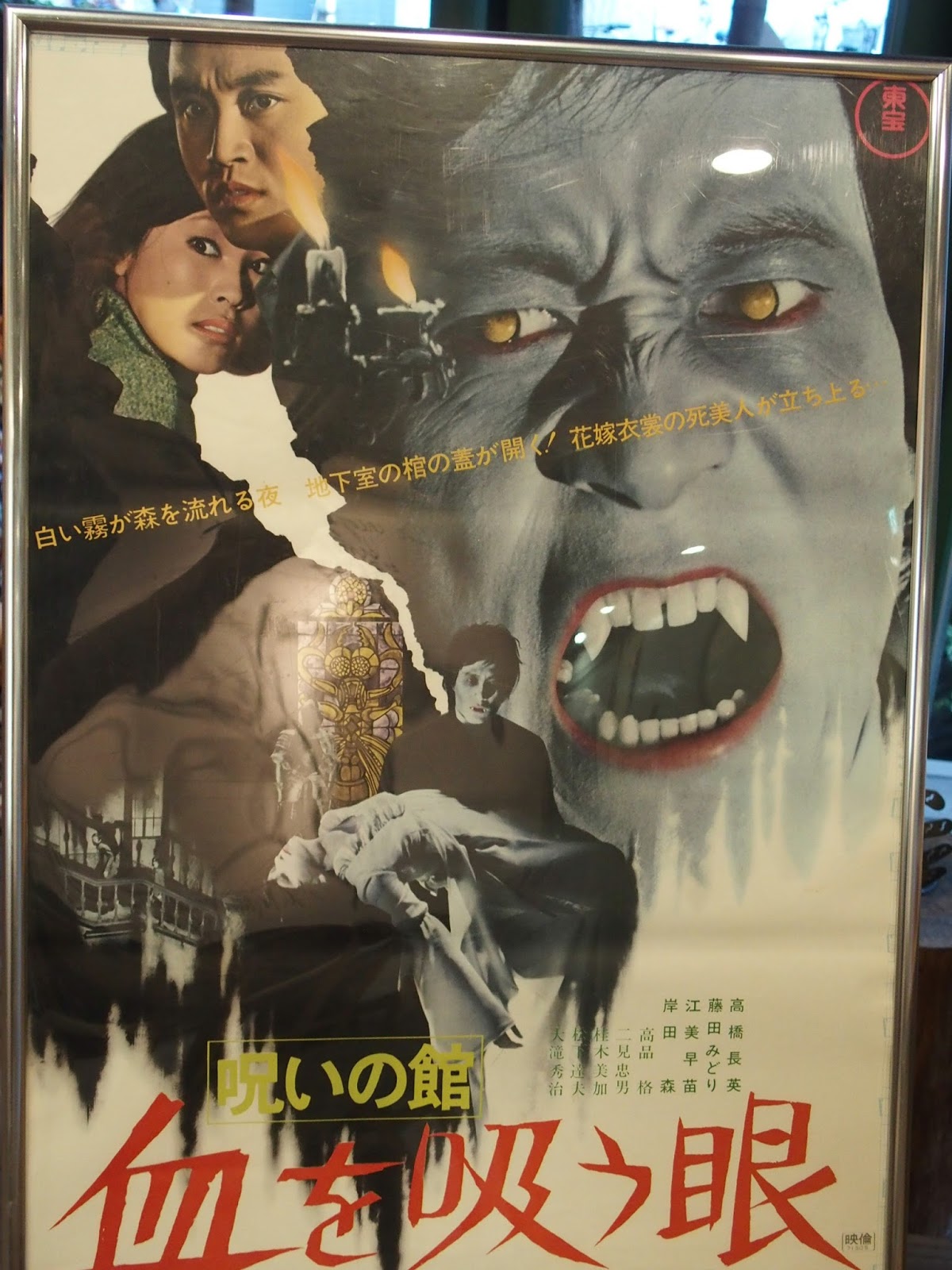
Evil of Dracula poster on display in the theater lobby. Photo by Brett Homenick. 

Tonight was another evening of Toho movies at the Laputa Asagaya. Tonight's double bill began with Jun Fukuda's Dai Nippon Suri Shudan (1969), a crime story (with strong elements of comedy) that pits a determined detective against a gang of pickpockets in Osaka. The detective (played by Keiju Kobayashi) and the leader of the gang (played by Norihei Miki) have an interesting wartime backstory together that fuels much of the story.

A poster for Dai Nippon Suri Shudan on display. Photo by Brett Homenick.

At one point, the detective attempts to arrest a gang member (played by a particularly dapper Akihiko Hirata) in a pachiko parlor after he catches Hirata's criminal in the act of pickpocketing. Hirata escapes, and Kobayashi gives chase. The ensuing chase through the streets of Osaka was quite exciting, bringing a bit of cinema verite to the proceedings that was often missing from Toho films during the 1960s. The chase ends when a car hits and kills Hirata's character, and the effect was surprisingly convincing.

I didn't know what to expect from the film, but it works on several levels. The comedy and drama seemed to blend well, and the audience I saw it with laughed with the film when it was funny. I'd strongly recommend this film to anyone who's still under the false impression that Jun Fukuda was some second-rate director.

Tonight's other film was Evil of Dracula (1974), which I'd rank as my favorite of the Bloodthirsty trilogy. (Lake of Dracula would get ranked at the bottom for me, but I still enjoy it.) It was a joy to see this one on the big screen in glorious 35mm. The detail in the gore effects at the end of the film was quite evident onscreen and was something of a revelation. Fun stuff!

Thursday, June 1, 2017

CREST OF THE WOLF! Seeing This (Sort of) Horror Movie at Laputa Asagaya!

The poster for Crest of the Wolf (1973) on display in the theater lobby. Photo by Brett Homenick.

Tonight, I returned to the Laputa Asagaya for a 35mm screening of Crest of the Wolf (1973), a pseudo-horror movie that has never really enthralled me that much. Those expecting a more traditional werewolf flick will certainly be disappointed. The werewolf scenes are incidental to the film, which plays more like a violent high school drama. 


What we do see of the werewolf isn't all that impressive, either. At some points, the lead actor is simply wearing a wolf mask (and retains his ability to speak), and at other times he's a full-blown wolf, attacking his enemies and causing untold amounts of blood spray. The effects of which are never really convincing.

There are no flashy transformation scenes, either. He just suddenly appears as a wolf. The rest of the movie is pretty trashy stuff (nudity, violence, etc.), especially from Toho. As I said, though, most of the movie revolves around a gang of violent high school thugs who don't take kindly to the new "lone wolf" student who does things his own way.

Here's a nice poster for Toho's Ichi ka bachi ka (1963) that was on display. Looks like a fun flick. Photo by Brett Homenick.

Still, screenings of Crest of the Wolf are extremely rare, so I wanted to take the opportunity to see it in 35mm. I'm glad I did, even though my opinion of the film hasn't changed much. It really isn't a bad film, and it does show a bit of stylistic flair, but let's face it, we're only seeing this movie because it has a monster in it. That's what we want, but it just doesn't deliver.

In Japan, the film is most notable for marking the screen debut of Yusaku Matsuda, a popular actor who went on to star as the main villain in Ridley Scott's Black Rain (1989), and who died shortly after completing that film. (Matsuda plays the leader of the high school gang in Crest of the Wolf.)

Monday, May 22, 2017

A RETURN TO THE MOVIES! Seeing Toho Flicks Again in Asagaya!

Tickets for tonight's double feature. Photo by Brett Homenick.

It's Monday, so that must mean I went back to the Laputa Asagaya for another double feature. On tonight's menu was a pair of Toho features, which couldn't be any more different from each other. One was the screwball romantic comedy The Dangerous Kiss (1960), and the other was the eerie vampire tale Lake of Dracula (1971). 

Prior to the screenings, another audio recording by none other than Shinichi Yanagisawa was played, describing the background of The Dangerous Kiss. It's always a treat to hear Yanagisawa-san's familiar voice. 

 A poster for The Dangerous Kiss (uh, the one on the right). Photo by Brett Homenick.

The Dangerous Kiss stars Akira Takarada, Reiko Dan, Ichiro Arishima, Sachio Sakai, and several other Toho regulars (most of whom didn't appear in the studio's monster films). It's a lighthearted, over-the-top comedy that doesn't take itself seriously for one second. Takarada-san plays a popular, handsome boxer named Akira Takada (get it?) who, after a car collision, is photographed by the paparazzi trying to revive a high school student (played by Reiko Dan) using an unusual combination of mouth-to-mouth resuscitation and ramen broth. The photo (looking more like a make-out session than a life-saving attempt) ends up on the cover of a gossip magazine and causes all sorts of shenanigans among the multiple women in Takada's life.

There's a lot happening in this film, everything from a food-fight sequence to a stage show at a nightclub featuring a guy in a yeti suit menacing a dancer. (The suit looked a bit like the one used in Half Human but, to my eye, was demonstrably different.)  Takarada-san was at his most charismatic here, and the entire cast was obviously having a lot of fun with the material.

Poster art for Toho's Lake of Dracula. Photo by Brett Homenick. 

After The Dangerous Kiss, it was time for a movie about a different kind of dangerous kisses -- you know, the kind vampires give you when they're trying to eat. Lake of Dracula was screened in all its glory, and it has obviously never looked better. I've never seen it in 35mm before, but the detail of the images was fantastic. Watching Shin Kishida's death scene at the end was quite intriguing. I never noticed before that the makeup used on Kishida's face during his death scene wasn't applied to his neck, making it plainly obvious to the viewer that it's all just a touch-up job.


And so ends another eventful Monday night. I'll be back at the Laputa Asagaya soon, but on a different night from my usual routine. Why the change? Stay tuned to this blog for the exciting answer!

Tuesday, May 9, 2017

Remembering Yoshimitsu Banno

Director Yoshimitsu Banno at a Q&A event in 2014. Photo by Brett Homenick.

Advanced Audiovisual Production, Inc., has announced that writer-director Yoshimitsu Banno passed away on May 7 at the age of 86. Banno-san directed the cult classic Godzilla vs. the Smog Monster (1971) and was an executive producer on Legendary Pictures' Godzilla (2014). He served as an assistant director to Akira Kurosawa on four films: Throne of Blood (1957), The Lower Depths (1957), The Hidden Fortress (1958), and The Bad Sleep Well (1960). He co-write and assistant-directed the Toho disaster film The Last Days of Planet Earth (a.k.a. Prophecies of Nostradamus, 1974).


I'd been in touch with Banno-san since I first met him in the U.S. in July 2005. When I moved to Japan in March 2011, he was one of the first people (if not the first) to share his cell phone number with me. When I visited Tokyo for the first time in May 2011, he was the very first person I visited.

Yoshimitsu Banno poses with Akira Takarada in May 2011. Photo by Brett Homenick.

Banno-san and I would regularly meet at the Cafe Chat Noir near Mukogaoka-Yuen Station in Kawasaki, Kanagawa. There he would often talk to me about his latest projects. He always had boundless energy and was determined to make another movie. I was sure he would.

A group shot from May 2013 with composer Riichiro Manabe (front row, middle) and Yoshimitsu Banno (front row, right).

Last year, when we met at the cafe on my birthday, Banno-san told me that he was planning to give me a Godzilla figure that he owned, but his wife balked at the idea, as she believed Godzilla was protecting him. Who could ask for a better protector?

Yoshimitsu Banno with his autobiography. Photo by Brett Homenick. 

Last year, he finally published his autobiography in Japanese. He wanted to publish it in English, but I'm not sure what, if anything, will come of those plans. When I met him for the last time on November 20 last year, he gave me a copy of his autobiography and signed it for me. Suffice it to say, I was glad to receive it.


When we met in November of last year, Banno-san seemed a bit weaker than his usual self. I didn't think much of it, as it didn't seem to impact his passion for future projects. This past week, I reached out to Banno-san via e-mail, asking if he'd like to get together soon. The date I pitched, in a truly strange coincidence, was Sunday, May 7. The next day, May 3, Banno-san called me and left a voice message, saying that he wasn't feeling well, but that we'd meet another time. I tried calling him back and left a voice message, acknowledging his phone call. Banno-san called me back on May 4 and left me another voice message. Suffice it to say, I regret not being available to take his final calls to me.

I'll always be grateful to Banno-san for his constant support and fellowship.

Rest in peace, Banno-san.

Friday, October 16, 2015

TERROR IN THE STREETS! Toho's Rarely Seen Hitchcockian Thriller!

Terror in the Streets © 1970, Toho Co., Ltd.

In this age of DVDs, Blu-rays, digital downloads, and everything else at our disposal, it's hard to believe that there are certain films out there that are by no means lost or intentionally withdrawn from circulation, yet are just about impossible to find. For fans of Toho sci-fi and horror films, one such title is the thriller Terror in the Streets (a.k.a. Akuma ga yondeiru, 1970), directed by Michio Yamamoto (Toho's Bloodthirsty trilogy) and scored by Riichiro Manabe (Godzilla vs. the Smog Monster, Godzilla vs. Megalon).

Terror in the Streets © 1970, Toho Co., Ltd.

Thanks to a very good friend of mine, I was finally able to see the elusive film in its entirety. Much speculation has arisen about the film in recent years, with many fans wondering just how much it could be classified as a genre picture. In order to find the answer, let's examine the film.

Yuri Ebara (played by actress Wakako Sakai) is a contract employee of a travel agency who is suddenly fired by her boss. To make matters worse, her boyfriend breaks up with her the same day. And, as if that weren't enough, she is also kicked out of her apartment.

Terror in the Streets © 1970, Toho Co., Ltd.

When she is thrown out of her apartment, a rather spooky and mysterious woman says goodbye to her since she is moving out of the complex. After her encounter with the old lady, she spots a stalker watching her from outside her window. Then she hears a mysterious ocarina sound of unknown origin.

Undaunted after her firing, Yuri applies for a job at a publisher and goes in for a job interview. During this time, she meets a handsome gentleman who works as an editor at the company. Feeling hopeful, she is confident that she will be hired and buys a purse to celebrate.

Yuri comes home to discover that her room has been ransacked and that her bankbook and hanko stamp have been stolen. To add insult to injury, it seems that her wallet was pick-pocketed by some thief as well. Shortly thereafter, Yuri's hopes become crushed when she receives a rejection letter from the company to which she applied for a job.

Terror in the Streets © 1970, Toho Co., Ltd.

Desperate for a job, she goes to a nearby bar and begins work as a hostess. As she talks with a lecherous old businessman, a heated squabble between the two soon erupts, and Yuri finds herself out of a job once again.

In total despair, she goes to an Odakyu Line train crossing to kill herself, but she is soon saved (or so it would seem) by the man who has been following her. He takes her to a restaurant and gives her a sleeping pill, after which he brings her home to her apartment in a taxi. He asks her to marry him, which she immediately refuses. The two begin to struggle, and Yuri loses consciousness. The next morning, however, she finds the man stabbed to death. Confused and frightened, she flees the scene and ends up meeting the editor again, who tells her she had been accepted for the position at the publishing company after all. (Someone had sent her a phony rejection letter.)

Terror in the Streets © 1970, Toho Co., Ltd.

She is now suspected of murder by the police and gets abducted by two people (a man and a woman) who take her to a go-go club. There she is forced to marry another man (played by Toshiaki Nishizawa, a.k.a. Kubota in Godzilla vs. Gigan). But the ceremony is suddenly interrupted by the lecherous businessman from earlier in the picture. Chaos ensues, but the kidnappers eventually escape and bring Yuri back to the man's apartment. There they find that the businessman is already inside, but this time he and his bodyguard are armed.

We soon learn that Yuri was appointed the inheritor in the will of a wealthy individual who is not related to her. All three of the would-be husbands (or killers) are related to this wealthy person, so if any of them can marry, adopt, or kill Yuri, they might get the inheritance.

Terror in the Streets © 1970, Toho Co., Ltd.

Throughout the film, whenever Yuri is in danger, the men hear the same strange ocarina tune, which aggravates and disturbs them, but the source of the sound remains a mystery.

After Yuri's daring escape from the apartment, she meets up again with the editor, and together they go to the villa of the deceased old man. There they meet his widow. She was her neighbor (and the spooky old woman) at the apartment complex. She was treated badly by her husband and got cut out of the will, so she became furious and got these men involved in her scheme for revenge. She wanted all three of them to kill each other and used the ocarina to confuse and disorient them.

Terror in the Streets © 1970, Toho Co., Ltd.

The movie is a straightforward thriller, and it is probably the most a Toho horror film ever comes to feeling like a Hitchcock suspense film. The business with the ocarina mysteriously being heard at various times has elements of the supernatural, but in the final analysis the movie is firmly grounded in the real world (even if the old lady's scheme is quite preposterous).

A good portion of the film feels like it could easily fit in with Yamamoto's Bloodthirsty trilogy, and a viewer could see the vengeance-obsessed old lady as this film's vampire character. In any event, the go-go club scene looks like it belongs in a Ken Russell film, and interestingly it predates the similar setting in Godzilla vs. the Smog Monster by a year. In fact, during the scene, Yuri tries to get the attention of a dancer who looks like she might have the prototype for Keiko Mari's character in Smog Monster.

Terror in the Streets © 1970, Toho Co., Ltd.

I enjoyed the film quite a bit, and at about 76 minutes, it moves quickly and doesn't wear out its welcome. I must praise Wakako Sakai's emotional performance, as she spends the bulk of the movie in absolute terror. She's very convincing in her role, and it's hard not to feel sympathy for her. Given that she usually played perky, upbeat young women at this point in her career (especially opposite Yuzo Kayama in the lighthearted Young Guy series), it certainly demonstrates her acting range.

It's great to have discovered this long-hidden gem of Toho's Showa era. Even though there aren't any ghostly creatures, it certainly qualifies as a horror film (or at least as a suspense thriller), and hopefully one day it will see the light on DVD. It most definitely deserves a broader audience.

Monday, February 9, 2015

Riichiro Manabe, 1924-2015


It has been announced that Godzilla series composer Riichiro Manabe has passed away at age 90 on January 29. Manabe-san wrote the scores for Godzilla vs. the Smog Monster (1971) and Godzilla vs. Megalon (1973), among many other film works.

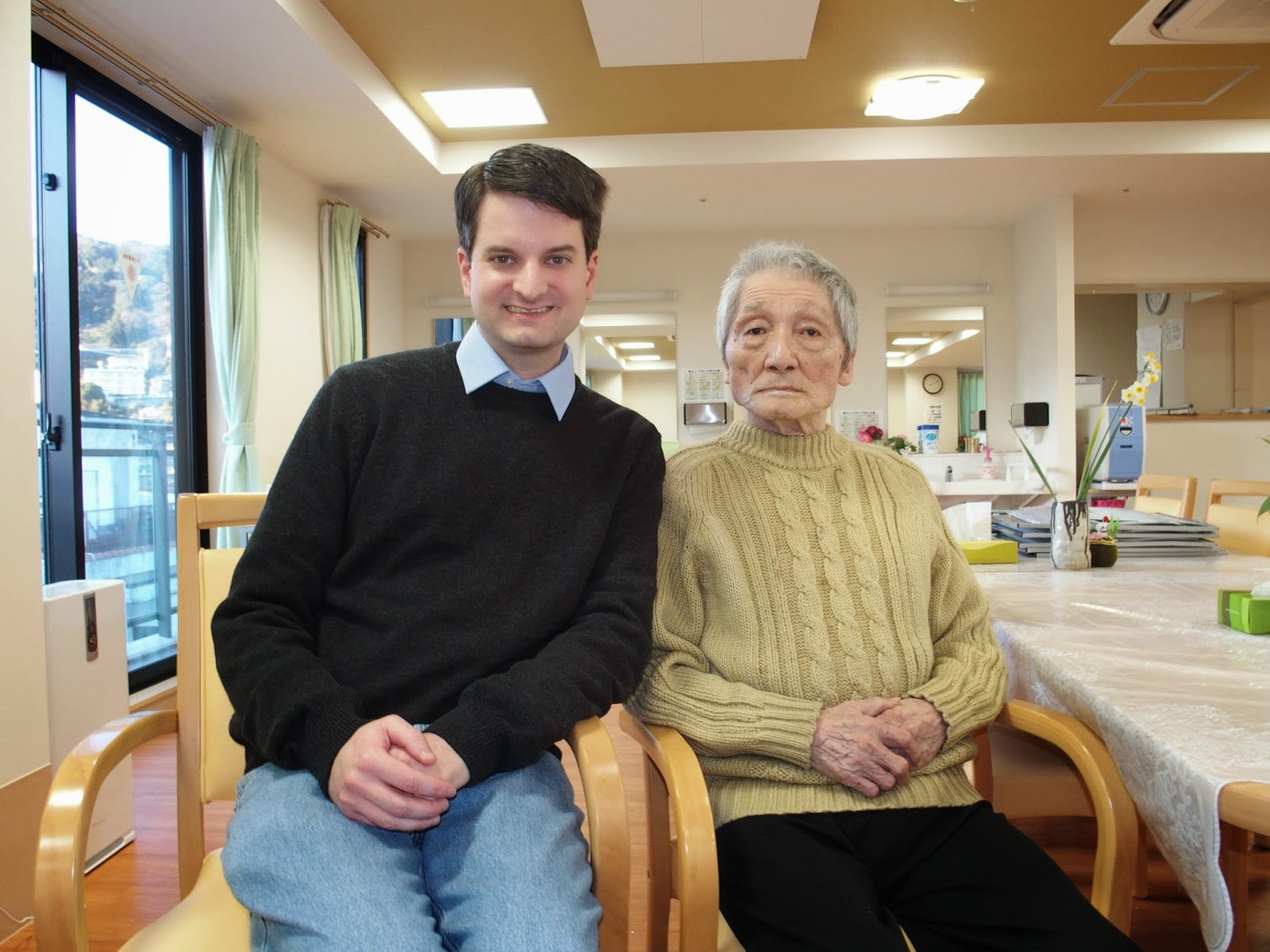
The photo above was taken on January 2. I was able to visit Manabe-san at his retirement home in Yugawara, Kanagawa, bringing a couple of boxes of manju as a gift. I sensed that Manabe-san seemed weaker than usual, but he seemed in fairly good health. As I was leaving, I assisted Manabe-san (along with a nurse on staff) in walking as I headed toward the elevator and gave him a hug. I remember waving to him as the elevator closed and went down. I still hoped for future visits, but it is not to be.

Riichiro Manabe and Yoshimitsu Banno share memories in Tokyo, May 2013. Photo by Brett Homenick.

In May 2013, I first met Manabe-san at a concert which celebrated Akira Ifukube's 99th anniversary. There Manabe-san was reunited with Smog Monster director Yoshimitsu Banno. It was my first time to meet Manabe-san, but I would be very fortunate in having several more meetings. I tried to interview Manabe-san a few times, but he was not interested in discussing his career.

I feel very fortunate I had the chance to meet him and tell him about my admiration for his music. I will miss him. Please rest well, sensei.

Saturday, January 3, 2015

HAPPY NEW YEAR! 2015 Kicks Off in a Big Way!

Visiting Godzilla series composer Riichiro Manabe in Kanagawa Prefecture.

January has finally arrived, and with it has come a new year. Things have already gotten busy. On January 2, I went to Kanagawa to see composer Riichiro Manabe and give him my holiday greetings personally. I brought him two boxes of manju, which he always enjoys. It's always a treat to see Manabe-san.


On the way back, I snapped a few photos of Odawara Castle from Odawara Station. With the birds flying nearby and sunset taking place, I thought the photos turned out rather well.


On January 3, my friend Yasushi and I paid a visit to Ultraman Ace actress Keiko Nishi at her cafe. Yasushi and I spent an enjoyable morning chatting with her and catching up on several topics. It was wonderful to she how well she was doing at the start of the new year.


We finished the morning taking some obligatory photos at the Godzilla statue at Hibiya Chanter Square. See how I dressed up for the occasion?

January is already off to a great start. Other events are in the works, so stay tuned!

Sunday, August 3, 2014

VISITING RIICHIRO MANABE: Spending Time with One of My Favorite Composers


I just returned from visiting Godzilla series composer Riichiro Manabe, with whom I spent about two hours. I brought Manabe-san a couple of boxes of manju, one of his favorite Japanese sweets. He always enjoys eating them as we talk.


Manabe-san composed the scores for Godzilla vs. the Smog Monster (1971) and Godzilla vs. Megalon (1973), among other titles.

I will likely visit Manabe-san again in the next month or so. And when I do, I'll be sure to bring a couple of boxes of manju!

Sunday, June 15, 2014

SAYING HELLO: An Afternoon with Composer Riichiro Manabe


Today I spent several hours in the company with composer Riichiro Manabe. My friend Yasushi and I brought him a few gifts (including a box of Japanese sweets, which he really enjoyed) and spent time discussing his career. Mr. Manabe is best known as the composer for Godzilla vs. the Smog Monster (1971) and Godzilla vs. Megalon (1973), but those two films were a drop in the bucket when one considers his entire body of work.

Good times were had by all. I hope to see Mr. Manabe again very soon.

Sunday, April 13, 2014

BUSY TIMES IN THE LAND OF THE RISING SUN! Updates on Various Comings and Goings

The cherry blossoms are always a sight to see, especially along Meguro River!

Having just moved to Tokyo from Gifu Prefecture, I've been busy. So I haven't blogged as much as I could have. Plus, not having Internet installed at home yet makes things that much more difficult. So I'm going to do a quick update on some of the things I've done since moving to Tokyo at the very end of March. Enjoy!


One highlight was attending an elaborate Eiji Tsuburaya/Ultraman exhibit in the Shinjuku Takashimaya department store. Plenty of artifacts, props, and even suits were on display. Japan remains the only place to see such cool stuff.


I also visited the brand-new Kaiju Sakaba bar in Kawasaki. After waiting in line for nearly two hours (!), I finally was able to sit down and order food and drinks. Was it worth a two-hour wait? Not really. It lacks the heart of the now-closed Kaiju-ya in Shibuya. Still, once the lines become shorter over time, Ultraman fans will want to check it out.


The biggest highlight so far was visiting Godzilla series composer Riichiro Manabe again. I brought him some Japanese sweets, which he enjoyed. We had a nice chat about things, and he's doing well. I look forward to visiting him again.


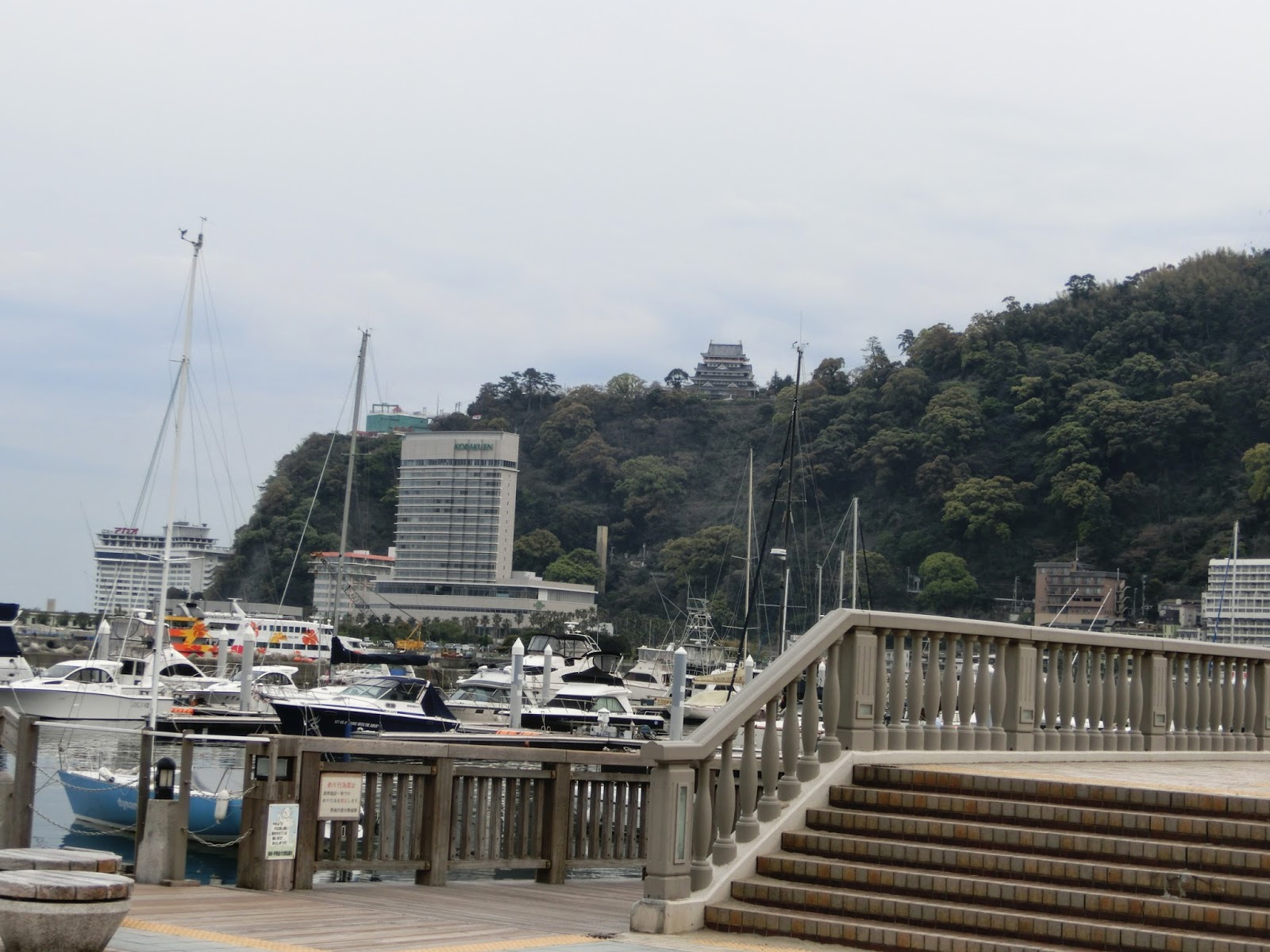
Although I didn't go inside, I got to see Atami Castle for the very first time. I'm saving the trek inside for a future visit. Definitely look forward to it!

Tuesday, May 7, 2013

GOLDEN WEEK 3: Tokyo During the Holidays!

Yours truly meets (and hugs!) the legendary composer Riichiro Manabe before Akira Ifukube's 99th birthday concert in Tokyo.

I just returned home from spending Golden Week in Tokyo (my third one so far), and it was an exciting time. The highlight proved to be meeting Riichiro Manabe, whose scores to Godzilla vs. the Smog Monster (1971) and Godzilla vs. Megalon (1973) are fan favorites. (Well, among some fans, anyway!) Manabe-sensei is truly a unique individual. More on that meeting in a future blog post.


At a Grissom Gang dinner, my friend Yasushi and I met several Toho alumni, including veteran kaiju suit builder Keizo Murase.


Also on hand was Toho Studios set photographer Takashi Nakao, whose tokusatsu career at Toho dates back to King Kong vs. Godzilla (1962) and runs through GMK (2001)! 


The gregarious suit builder Fuyuki Shinada ate with us fans, too, and he had many cool stories to tell.


Through my friend Aizu Shingo, I was able to meet former child star Yoshinobu Kaneko. Kaneko-san was the boy in King Kong vs. Godzilla who wanted to see Godzilla (and was quickly shut down by his mother). He is much better known for his roles in Watari the Ninja Boy (1966) and Red Shadow (1967).


Tokyo Tower -- nuf sed! All in all, it was a great time, made better by all the friends I saw. Many thanks to everyone who helped make it one for the history books!