Showing posts with label Kinji Fukasaku. Show all posts

Monday, March 25, 2024

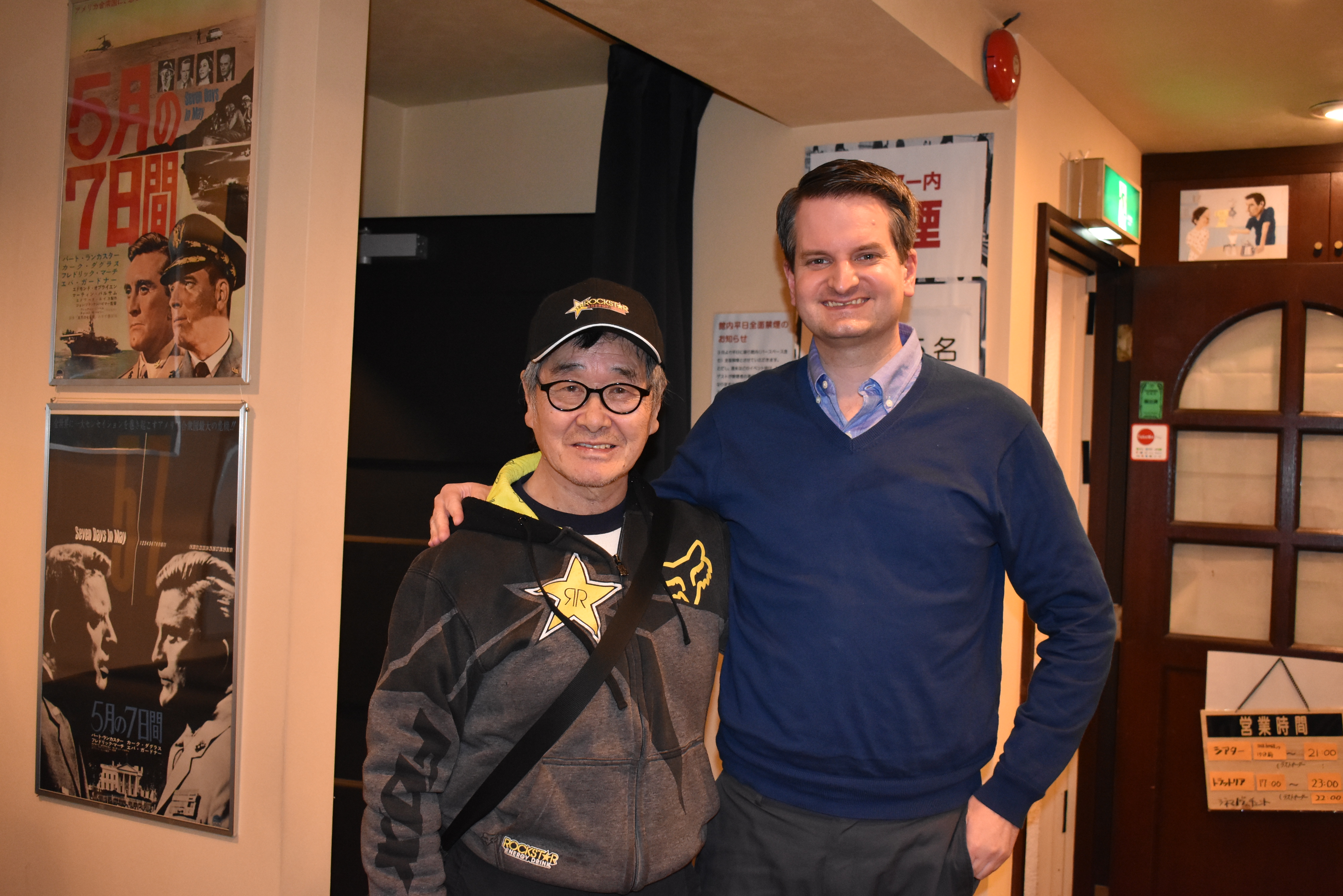
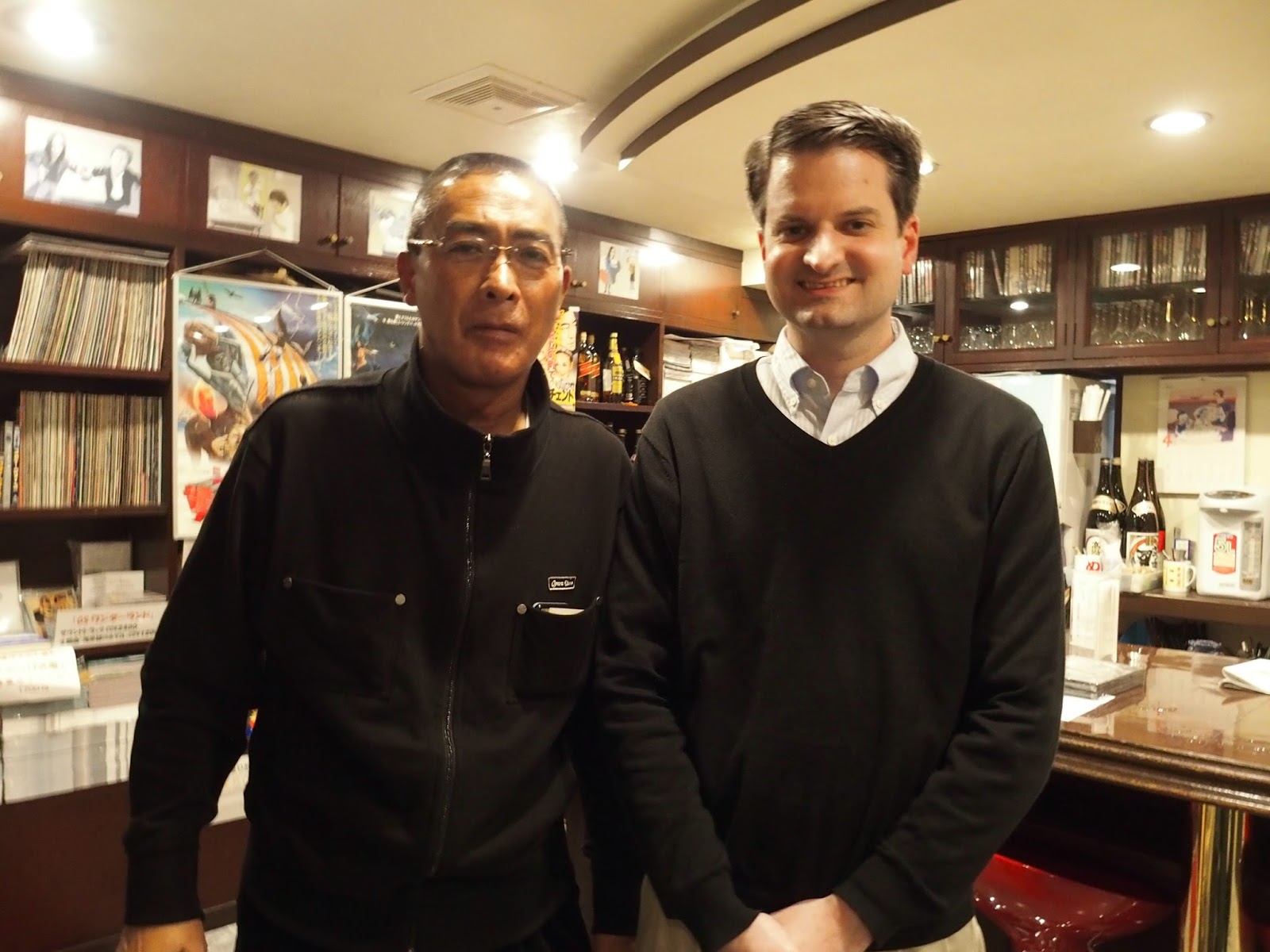
ONE YEAR LATER! Hanging Out with Yamamoto-san Again in Koenji!

Hiroshi Yamamoto. Photo by Brett Homenick.

Today (Monday, March 25), I was pleased to spend a couple of hours with Hiroshi Yamamoto. We met up near his home in Koenji and went to cafe to have a lengthy discussion about his career in the entertainment industry. Back in April of 2023, we hung out again for the first time in about eight years, so I'm glad we managed to get together before another eight years had passed.

Hiroshi Yamamoto poses with a VHS copy of Gamera Super Monster (1980) from his personal collection. Photo by Brett Homenick.

Yamamoto-san and I first met at an event for the late Sonny Chiba in April 2013 and have kept in touch on and off since then. Yamamoto-san worked in the post-production end of numerous tokusatsu productions, both on film and television, from the late 1970s through the early '90s.


Of particular note, Yamamoto-san has worked with director Kinji Fukasaku on projects like Message from Space (1978), Samurai Reincarnation (1981), and Legend of the Eight Samurai (1983). Some of his other credits include Gamera Super Monster (1980), G.I. Samurai (1979), and numerous Toei superhero programs, lending those projects his company's expertise in video techniques.


One interesting tidbit I learned was that Yamamoto-san is especially proud of his work on Samurai Reincarnation, and it's his favorite of his own work. I've never seen that film, so now I've got to check it out.

Before we parted ways, Yamamoto-san gave me a VHS copy of the live-action tokusatsu actioner 8 Man (1992), on which he worked as a producer. Yamamoto-san insisted I take it, and, since he has another copy at home, I felt it was OK to accept. 

It was a great afternoon with a wonderful gent. I hope we'll get a chance to hang out again someday.

Sunday, November 5, 2023

A Visit to T-Joy Seibu Oizumi and Its Toei Exhibition Space!

T-Joy Seibu Oizumi. Photo by Brett Homenick.

A rather unexpected place to find Toei history represented is in the T-Joy Seibu Oizumi movie theater in Nerima, Tokyo. However, as it stands virtually right next to Toei Movie Studios, perhaps it's not such a random situation. The highlights of the exhibit for me were the parts featuring actor Ken Takakura and director Kinji Fukasaku, which you can see below. Oh, and Godzilla Minus One (2023) is playing there, too. Suffice it to say, this theater has it going on!


Friday, April 14, 2023

A Fun Evening Hearing About Tokusatsu History!

Hiroshi Yamamoto. Photo by Brett Homenick.

On Thursday night, April 13, I spent the evening with Hiroshi Yamamoto, a friendly gent I met almost exactly 10 years ago. We first met at an event for the late Sonny Chiba in April 2013, and who would have guessed that we'd still be hanging out 10 years later?

Yamamoto-san worked in the post-production end of numerous tokusatsu productions, both on film and television, from the late 1970s through the early '90s. He talked about how meticulous director Kinji Fukasaku was on projects like Message from Space (1978) and Legend of the Eight Samurai (1983), while noting how gentle and even passive Noriaki Yuasa was during the making of Gamera Super Monster (1980). He also described the kindness of Toei/Tsuburaya tokusatsu director Nobuo Yajima, whom he got to know quite well.

It'd been quite a few years since I last visited Yamamoto-san, which I really regret. I'm glad we had a chance to catch up again after so many years. Yamamoto-san updated me about his current pursuits in the entertainment business. At 77, I'm glad he is staying active.

I look forward to meeting Yamamoto-san again soon!

Sunday, September 12, 2021

Robert Horton Biography Now Available!

Robert Horton poses with The Green Slime costar Luciana Paluzzi in Los Angeles in 2009. Photo by Brett Homenick.

Author Aileen Elliott's biography of actor Robert Horton entitled In Search of Flint McCullough and Robert Horton: The Man Behind the Myth has just been published by BearManor Media. This 356-page tome promises to be the most in-depth examination of the actor's life and career ever published.

Robert Horton, with his wife Marilynn Bradley Horton, prepares to sign autographs. Photo by Brett Homenick.

Sometime after his passing in 2016, I was contacted by the author and conducted an interview by email about my memories of Mr. Horton. I was happy to have the opportunity to contribute to the book and look forward to seeing how everything turned out.


I had the privilege of interviewing Mr. Horton in 2008 and stayed in touch with him until his passing. I always enjoyed our telephone conversations and wish we still could have more. I met him for the first time at a screening of the The Green Slime (1968) in Los Angeles in 2009. In the summer of 2012, Mr. Horton invited me to visit him at his home when I visited L.A. from Japan. 

Fans of The Green Slime ought to give In Search of Flint McCullough and Robert Horton: The Man Behind the Myth a read. When I get the chance, I know I will!

Sunday, February 28, 2021

A Late Start on Kicking Off the New Year!

Katsumi Yanagijima. Photo by Brett Homenick.

Things have been quiet in Japan recently, due in large part to a certain pandemic that's still raging. However, things are slowly but surely starting to come back. For instance, I attended my first event in a couple of months last night, February 27. The guest of honor was cinematographer Katsumi Yanagijima.

His name might not immediately ring any bells, but his credits as cinematographer certainly do: Kinji Fukasaku's Battle Royale (2000), Takeshi Kitano's The Blind Swordsman: Zatoichi (2003), The Grudge 2 (2006), and Robo-G (2012). Like many guests at such events, he was very approachable, and I just had to tell him how much I admired Battle Royale.

Hironobu Hagimae. Photo by Brett Homenick.

As a surprise bonus, Hironobu Hagimae was also on hand. Hagimae-san was the motorcycle stuntman for the original Kamen Rider (1971-73) and continued in that capacity throughout the '70s.


I've met him several times in the past few years, and it's always a blast to see him. He's a super-friendly guy!

I look forward to things returning to normal, but we still have a long way to go. Last night's event was a good start. Let's hope it continues.

Sunday, March 1, 2020

An Evening with a Legendary Cinematographer!

With Daisaku Kimura.

Tonight, I attended an event with legendary Japanese cinematographer Daisaku Kimura, whose credits include several classic Akira Kurosawa movies, as well as tokusatsu greats as Submersion of Japan (1973), Blue Christmas (1978), and Virus (1980). One thing's for sure: Kimura-san certainly doesn't hold back in expressing himself!


It was certainly an enlightening experience. Kimura-san is truly one of the greats of Japanese cinema.

Monday, November 4, 2019

DAY OF RESURRECTION! An Evening with Cinematographer Daisaku Kimura!

Daisaku Kimura. Photo by Brett Homenick.

On Sunday, November 3, I took in a screening of the all-star, end-of-the-world epic Virus (a.k.a. Day of Resurrection, 1980) in glorious 35mm. Suffice it to say, I'd never seen it in 35mm before (and really, I don't know many others who have), and it was a joy to watch. I noticed a lot of small details, such as a hand-drawn picture of Ultraman hanging in a young boy's bedroom. I thoroughly enjoyed the picture, even if some of the situations (such as a massive earthquake hitting Washington, D.C.) seemed more than a bit contrived to move the plot along.


The guest of honor was a true legend of the Japanese film industry: cinematographer Daisaku Kimura. His credits include: Submersion of Japan (1973), Blue Christmas (1978), the aforementioned Virus, and Station (1981), among many others. In 1958, Kimura-san joined Toho Studios and worked as an assistant cameraman under Akira Kurosawa, during which time his most prominent credit was Yojimbo (1961). In 1973, he became a cinemtographer in his own right. He also once came pretty darn close to becoming the cinematographer on a Godzilla film, but that's a story for another day.

Overall, it was a great evening, and I was fascinated by all the stories from the set of Virus, particularly the ones about the Western cast. Needless to say, fun was had by all.

Sunday, January 21, 2018

AN EVENING WITH A CINEMATIC LEGEND! Meeting Cinematographer Daisaku Kimura!

Daisaku Kimura. Photo by Brett Homenick.

Earlier this evening, I attended a special dinner event with cinematographer Daisaku Kimura. A good case could be made that he is the greatest cinematographer in Japanese film history. A quick look at some of his credits ought to be an indicator: Submersion of Japan (1973), Blue Christmas (1978), Virus (a.k.a. Resurrection Day, 1980), and Station (1981), among many others. 

In 1958, Kimura-san joined Toho Studios and worked as an assistant cameraman under Akira Kurosawa, during which his most prominent credit was Yojimbo (1961). In 1973, he became a cinemtographer in his own right. 


Blue Christmas and Station are two of the best-looking movies I've ever seen, and Kimura-san filmed both. Suffice it to say, it was a true honor to meet him. At the end of the event, I was saying my goodbyes when Kimura-san asked where I lived. When I mentioned my neighborhood, he told me it wasn't too far from his home, and so he invited me to ride in the car with him. (It sure beat taking the train back, that's for sure!) It was certainly a unique experience, and thankfully the driver didn't seem to mind the short detour to my neighborhood.

What a cool evening!

Monday, May 8, 2017

BACK FOR MORE! Another Monday Night at the Movies!

Tickets for tonight's show! Photo by Brett Homenick. 

It was that time again. I returned to the Laputa Asagaya to take in some more films. Tonight's lineup featured two movies that were brand-new to me.

The poster for Toho's Hakone-yama. Photo by Brett Homenick. 

First up was Hakone-yama (1962), a black-and-white Toho drama that is sort of a retelling of Romeo and Juliet. The film stars Yuzo Kayama and Yuriko Hoshi as the young lovers, but their blossoming romance is complicated, Shakespeare-style, by the conflicts of two competing Japanese inns during an explosive period of growth in Hakone's tourism industry.

Black Rose's poster. Photo by Brett Homenick.

Following Hakone-yama was the Kinji Fukasaku-directed Black Rose (1969), a pseudo-sequel to Fukasaku's Black Lizard (1968), from Shochiku Studios. I'd never seen Black Rose before, despite knowing of its existence for nearly 20 years. Honestly, I've never seen it available anywhere, officially or unofficially. This was my first opportunity to see the film. What did I think of it? I'll get to that in a moment. But let's return to Hakone-yama first.


While there is something to be said for the merits of Hakone-yama, I must admit that it bored me much of the time. Of course, this isn't entirely the movie's fault, as it's to be expected when you're watching an unsubtitled drama in a foreign language, but so much of the movie moved at a glacial pace that I must ding it for that. Still, the performances were strong, and I do hope to have the chance to see the film subtitled someday.


Black Rose was a much more dynamic and interesting film, even with no subtitles. That said, it is a much less ambitious and much less of a genre picture than Black Lizard, and it has virtually nothing to do with its predecessor, aside from the fact that male actor Akihiro Maruyama returns as a female character. In fact, some actors from Black Lizard return here, but in completely different roles. The camp you'd expect from a film like this is certainly evident, but in much less quantities. Overall, I enjoyed it, and I appreciated the fact that it didn't try to rehash the first film.

Monday, April 24, 2017

A NIGHT AT THE FLICKS! Asagaya Is the Place to Be!

Signage outside the Laputa Asagaya in Tokyo, announcing its two-month-long Toho program. Photo by Brett Homenick.

The Laputa Asagaya is running two concurrent programs of great interest to me (and readers of this blog). The main program (featured above) is the Toho Bungei Eiga ("Toho Literary Movie") program, which will feature all kinds of classic Toho films from the Showa era. No tokusatsu or genre pictures are on tap, but there are several intriguing movies that will be screened that I hope to catch.

The other program only runs at night, and it's called "Into Nightmares." As you'd expect, the focus is on horror and other strange films, covering a 20-year span (1968 through 1988). Everything from Shochiku's The Living Skeleton (1968) to Toho's Bloodthirsty trilogy will be screened in the upcoming weeks at 9:00 p.m.

My tickets for tonight's films on top of a program booklet. Photo by Brett Homenick.

Tonight, I took in two films. The first one is called Zou (Elephant, 1957). It's a Toho drama directed by the legendary Kajiro Yamamoto (who mentored Akira Kurosawa and Ishiro Honda) and helmed The War at Sea from Hawaii to Malaya (1942). A bevy of Toho regulars appear in the film, including Keiju Kobayashi, Momoko Kochi, Sachio Sakai, and several others. The setting is the Tokyo Ueno Zoo, and most of the drama centers around an elephant named Tonki (who's very popular among the locals) and an old zookeeper who's grown attached to the animal. Sadly, the animals at the zoo eventually become casualties of war. It's a real tear-jerker that would make any animal lover a little weepy. An interesting touch was that, in one scene, the elephant starts roaring like Toho's King Kong! Nice to find a tokusatsu connection in a film as far removed from fantasy as this one. Also a shout-out to the cute baby lion featured in the film named Katrina (whom some young schoolchildren repeatedly refer to by name).

The other film I watched was Kinji Fukasaku's Black Lizard (1968), a very bizarre film that almost defies description. I watched it many years ago (circa 2002), and it had such little impact on me that I hardly remembered anything of it! So it was basically like watching a brand-new movie tonight. It was certainly very stylish, perhaps the most stylish Fukasaku film I've ever seen. But it's very campy and outlandish, without being too laughable. Again, it's hard to describe. But it's an entertaining film, and I'm glad I gave it a second look. 

I'll definitely be back for more!

Saturday, April 8, 2017

TOEI IN DA HOUSE! Yakuza Stars Gather for a Special Event!

With Toei actor Ryuji Katagiri. 

Tonight, I was pleased to attend a dinner with a different set of guests from the ones I usually meet. The guest of honor was Toei veteran Ryuji Katagiri, who began his acting career in the early 1970s at Toei Studios. He appears in the Sonny Chiba actioners The Street Fighter (1974), Return of the Street Fighter (1974), and The Street Fighter's Last Revenge (1974). He was also a regular in Kinji Fukasaku's Battles Without Honor and Humanity series.

With actor Ken Musashi.

Also on hand was actor Ken Musashi, a V-cinema (direct-to-video) star who specializes in yakuza flicks. Both he and Katagiri-san appear in Hiroshi Kashiwabara's new film A Long Way Off the Kilimanjaro (2016). Kashiwanbara-san was also there, and I enjoyed catching up with him again. 

Sunday, November 9, 2014

A Salute to Michael Lennick

Michael Lennick on the set of Kinji Fukasaku's Virus (1980). Photo courtesy of Michael Lennick.

I'm very sorry to report the passing of Michael Lennick. Michael was a special effects technician/supervisor and documentary filmmaker, who worked on films like Videodrome (1982), The Dead Zone (1983), and Dick (1999).

I interviewed Michael several years ago for G-FAN about his involvement with Virus (a.k.a. Fukkatsu no hi, 1980), a Japanese end-of-the-world sci-fi film directed by Kinji Fukasaku. He had many great memories about making the film, and he sent me a few behind-the-scenes photos, including this one of him on the Palmer Station set.

According to Michael's friend Robert J. Sawyer, Michael died yesterday after being diagnosed with an aggressive brain tumor just a month ago. He was 61. Rest in peace, Michael.

Tuesday, September 27, 2011

Edogawa Rampo rampages in English!

Acclaimed mystery writer Edogawa Rampo ponders black lizards, malformed men, and blind beasts. Just another day at the office for this prolific Japanese author... Source: here.

If the name Edogawa Rampo sounds a bit like Edgar Allan Poe to you, then 1) you're quick on the uptake, or 2) you're already familiar with the work of author Taro Hirai (1894-1965), who took the aforementioned pen name as a nod to one of his main influences.

And, if you're already familiar with the name of Edogawa Rampo, it's likely through the movies based on his writings, such as Kinji Fukasaku's Black Lizard (1968, featuring fellow author Yukio Mishima), Teruo Ishii's Horrors of Malformed Men (1969), and Yasuzo Masumura's Blind Beast (1969).

While the above titles have been written about and discussed by fans of Japanese genre films, how many of these fans have actually read the source material? What's that, you say? They're not available in English?

Ha! Ha, I say!

"Eh," sez Edogawa Rampo to fellow writer (and Black Lizard actor) Yukio Mishima. "If they made a movie about my life, I'd so get more than four chapters." Source: here.

Thanks to a couple of book publishers who specialize in translating Japanese fiction into English, you now have your chance!

Kurodahan Press has translated Black Lizard into English, and it can be purchased here. Meanwhile, Shinbaku Books has done the honors for Blind Beast, and that title can be bought by following this link.

And, for something not-so-completely different, Tuttle Publishing has translated Lafcadio Hearn's Kwaidan into English, which will have you howling, "Kowai!" It can be purchased here.

With Halloween on the horizon, the time is right to crack open a few of these books! Break out those reading glasses today!